
October 12, 2026 / 4 min read
How to Write Landing Page Copy for an Unfamiliar Artist
A simple copy structure for helping a new visitor understand an artist quickly, feel the relevance of the song and choose the next action.
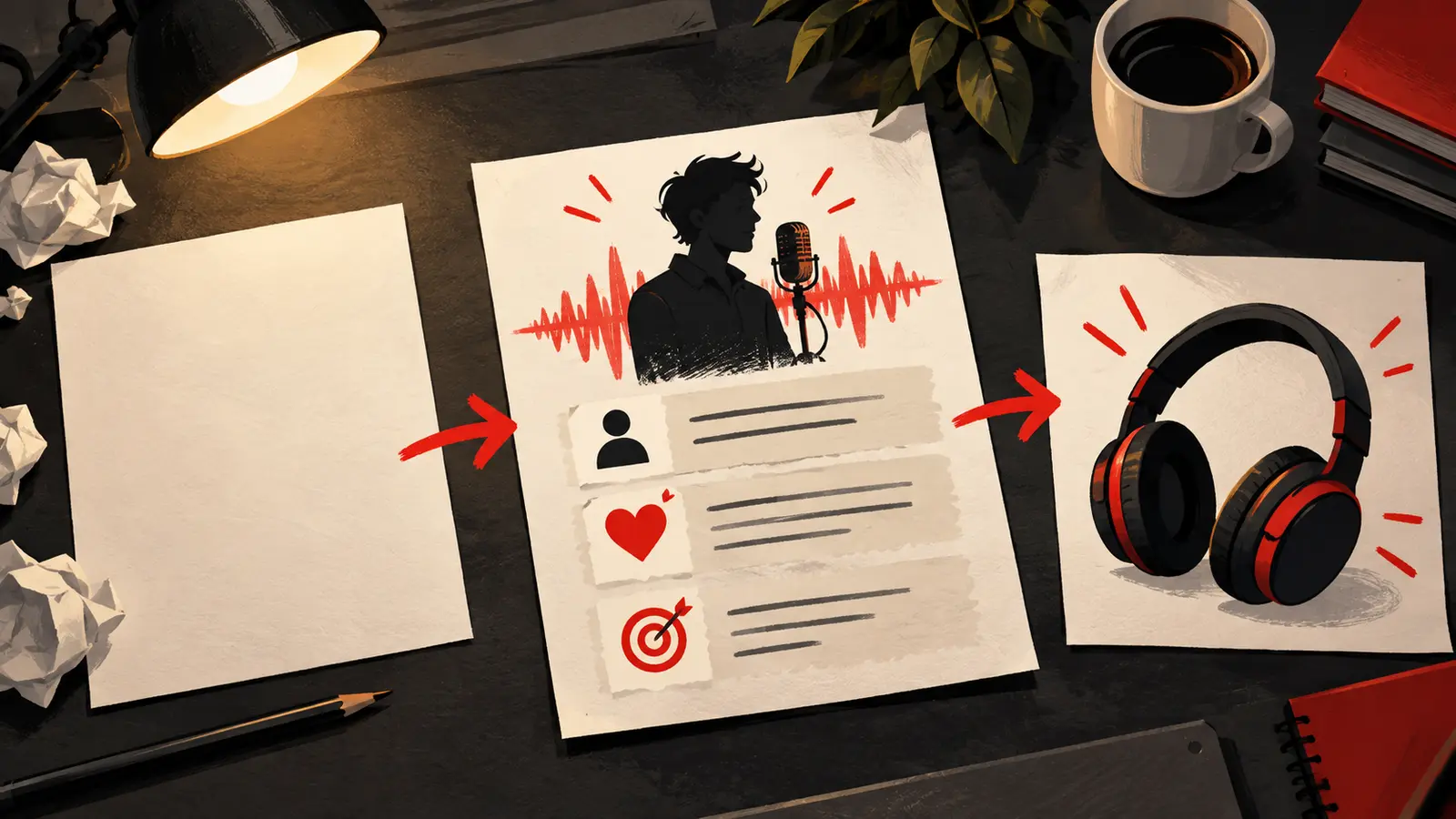
A person who already loves an artist needs very little explanation. A person who has never heard the name needs orientation before they decide whether to listen. That is the copy problem on a paid music landing page: give enough context to make the song feel relevant, without burying the music under a biography.
The goal is not to make every visitor a fan with one paragraph. The goal is to help the right visitor understand the entry point and take a meaningful next action.
Begin with the release, not a grand claim
The first line should tell people what they have arrived to hear. Use the artist name, song title and a useful description of the experience. A specific mood, setting or tension is more helpful than “the next big artist” or “the song everyone is talking about.”
A useful structure is:
[Artist] - [Song] is a [clear musical or emotional description] for people who [relevant situation or feeling].
For example, an electronic single might be introduced as a late-night track built around a slow rise and a heavy final release. An acoustic song might be framed as a close, conversational record for people sitting with a difficult goodbye. The sentence gives the visitor a reason to test the music for themselves.
Give the visitor one reason to care
Unfamiliar artists do not need a full history at the top of the page. They need one reason the song is worth a few minutes. That reason might be:
- A distinctive sound or production choice.
- A feeling the song captures clearly.
- A live moment or visual world connected to the release.
- A story that adds context without asking the visitor to admire the artist first.
Use evidence when you have it, but do not manufacture it. If the song was not featured by a named outlet, do not imply that it was. If you do not have a real audience result, describe the song rather than inventing a performance claim.
Make the copy easy to scan
Paid visitors often arrive from a fast feed environment. They may read the headline, look at the cover or video, and decide within seconds whether to continue. Use short paragraphs, descriptive subheads and one primary call to action.
A page can follow this order:
- Song identity and one-line promise.
- Short visual or audio introduction.
- Two or three sentences of context.
- Primary listening action.
- Optional proof, lyrics, video or fan signup.
Do not force a visitor to read a long artist biography before hearing the release. Put deeper context lower on the page for people who want it.
Write a call to action that names the next step
“Listen to [Song] on Spotify” is clear when Spotify is the intended destination. “Choose where to listen” is clear when the page offers several services. “Join the list for release updates” is clear when the goal is fan data.
Avoid stacking several equal calls to action at the top. If listening is the campaign goal, make listening primary. If the campaign is designed to capture a fan contact, explain what the visitor will receive and how often you plan to communicate.
The landing page should extend the expectation set by the ad. Before launch, compare it with the paid-promotion readiness checklist and make sure the creative, page and measurement tell the same story.
Use proof without borrowing credibility
Proof can lower uncertainty, but it has to be real and relevant. Good proof might include a verified editorial mention, a confirmed show date, an accurate quote from a review or a genuine detail about the recording. Label the source or context when it matters.
Avoid vague phrases such as “critics are calling it a masterpiece,” anonymous numbers or claims about algorithmic placement. A visitor who notices inflated language may trust the page less, even if the song is good.
Write for the person, not the genre label alone
Genre can help with orientation, but it is rarely enough to create interest. “Alternative pop” describes a category. It does not tell a visitor what the song feels like or when they might want to hear it. Combine genre with a scene, emotion, instrument, rhythm or use case.
This is especially useful when the artist is new. People can recognize a situation faster than they can evaluate an unfamiliar name.
A copy test with one clear question
Do not rewrite the entire page every time the campaign moves. Test one meaningful difference:
| Test question | Version A | Version B |
|---|---|---|
| What creates recognition? | Artist and song first | Song feeling first |
| What reduces uncertainty? | Short artist context | Recording or live context |
| What makes the action clear? | “Listen on Spotify” | “Choose where to listen” |
Keep the destination, audience and creative stable enough that you can interpret the result. Copy can affect clicks and button actions, but it cannot guarantee a stream or a long-term fan relationship.
Final copy checklist
Before publishing, ask:
- Can a stranger name the artist and song after one quick scan?
- Is the reason to listen specific rather than inflated?
- Is the main action visible and unambiguous?
- Does every claim have a real basis?
- Does the page sound like the artist rather than an ad template?
A clear page lets the music do the convincing. If you want help shaping the copy, creative and measurement into one campaign, apply to work with Shuffle.
Want this run on your release?
We take on a limited number of artists and labels, and we read every application ourselves.
Apply to Work With Us