
November 2, 2026 / 5 min read
How to Use Fan Feedback to Improve Music Marketing
Fan feedback is useful when it changes a decision. Learn how to ask better questions, collect consent, identify patterns and turn responses into clearer music marketing tests.
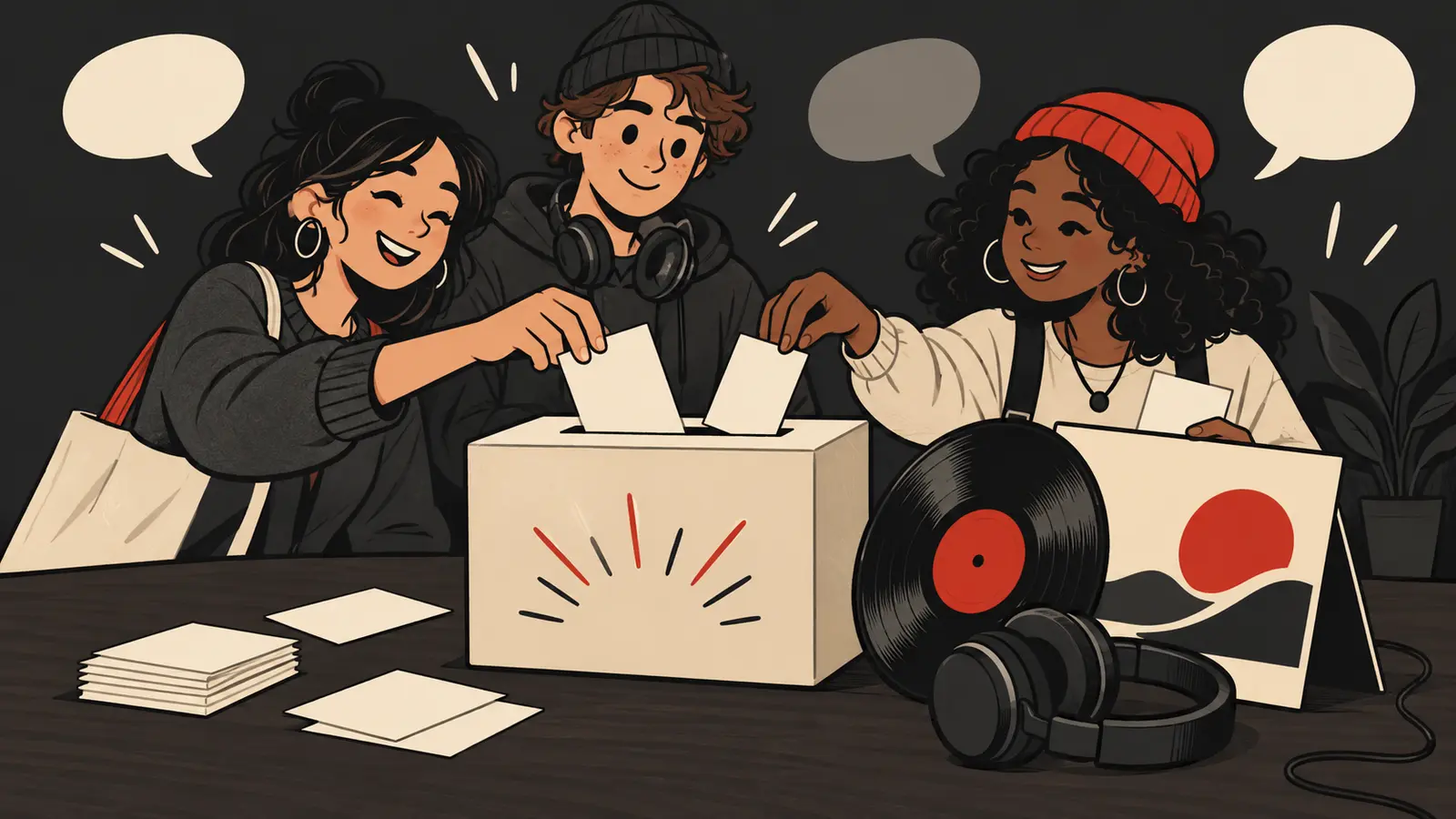
Use fan feedback to improve music marketing by asking questions tied to a real decision, collecting only the information you need and testing the patterns you find. A survey is useful when it changes a message, creative concept or listener journey. It is not proof that a song will succeed or that respondents represent every potential fan.
Start with one decision you can act on. For example, you might want to understand which description helps unfamiliar listeners understand a song, or where existing fans find the listening page confusing. Those questions require different participants and different interpretation.
Choose the decision before the questions
Write the decision in plain language: “Which introduction should we test?” or “What prevented people from finding the full song?” Then identify what an answer would change. If a question cannot affect a practical action, consider removing it rather than asking fans to do unnecessary work.
Avoid turning a feedback form into a request for reassurance. “Do you love our new song?” invites approval without explaining the marketing problem. “What did you expect after watching this clip?” can reveal whether the ad's promise matches the destination.
Define whose feedback is relevant
Existing fans can describe what they value about the artist, but they may understand references that unfamiliar listeners do not. Recent page visitors can report handoff problems, while people who never visited cannot assess the actual page experience. Keep these groups separate in the analysis.
This article focuses on feedback as a decision tool. The guide to owning fan contacts covers the broader relationship and why access to an audience also creates a responsibility to communicate appropriately.
Collect permission without bundling unrelated consent
Explain who is collecting responses, why the information is needed and how it will be used. Make participation voluntary. If you want to send marketing emails, present that choice separately from survey participation; answering a question is not automatically permission for ongoing promotion.
Collect minimal personal information. You may not need a name or email address to compare reactions to a creative concept. Avoid requesting sensitive details or uploading identifiable responses to advertising tools without an appropriate legal basis and clear disclosure.
An anonymous survey should not require identifiable information. If a tool collects technical identifiers or contact details, do not promise anonymity without checking the actual setup. Define access, retention and deletion responsibilities, and obtain qualified advice when jurisdiction-specific privacy obligations require interpretation.
Ask neutral, answerable questions
Use wording that does not steer people toward the response you want. Instead of “How exciting was the amazing performance clip?” ask what caught their attention, what they remember or what action they expected next. Give respondents a way to say that neither option fits.
A practical short question set
For a hypothetical creative-framing test, you could ask:
- What stood out first in this clip?
- How would you describe the music to someone else?
- What would you expect to find after following the link?
- Was anything unclear or distracting?
- Is there anything else you want the team to know?
Use optional questions where an answer is not essential. Avoid making people recall exact dates or technical actions they cannot reliably remember. A response describing a listening intention should remain an intention, not be counted as a verified stream.
Keep one topic per question. Asking whether the music and page were “clear and enjoyable” makes it hard to interpret a negative answer. Separating those questions gives you a more useful path to a change.
Recruit without pretending the sample is universal
Invite participants through channels where you have appropriate permission and explain why their perspective matters. Do not repeatedly message nonresponders or treat participation as a condition of remaining a fan. If you offer an incentive, disclose it and consider how it may affect who responds.
Record the recruitment source and relevant audience role without collecting unnecessary detail. A voluntary email survey mainly represents people willing to answer that invitation. It does not automatically describe unfamiliar listeners reached through paid advertising.
If you need to understand new-audience framing, seek feedback from people who genuinely lack the artist's existing context. Keep their responses distinguishable from established fans. Do not combine the groups and call the average a market-wide preference.
Look for patterns and contradictions
Group answers by the decision they inform: musical language, emotional framing, unclear expectations or destination friction. Keep examples of disagreement, not only comments that support the team's favorite concept. A small collection of enthusiastic responses cannot establish a platform benchmark or predict campaign performance.
Separate direct observation from interpretation. “Several respondents expected a live version after the performance clip” is a pattern in the responses. “The live concept will generate more listeners” is a hypothesis that still needs a test.
Avoid unnecessary precision with small or self-selected samples. Explain who answered and what limits the conclusions. A recurring confusion can be worth fixing even when the sample cannot support a population estimate.
Translate feedback into a controlled marketing test
Choose one change connected to the strongest useful pattern. If respondents cannot identify the listening action, test clearer button wording while keeping the destination and creative consistent. If they misunderstand the music, test an introduction that better reflects the song rather than adding unrelated promotional claims.
The artist fan-capture landing-page guide helps distinguish listening from optional contact collection. Feedback can improve both experiences, but a clearer form does not prove stronger streaming behavior.
Document the original version, proposed change and success question. Compare observed page actions separately from available listening reports. Do not call a preference poll a conversion experiment; people describing what they might do is different from people actually taking an observable action.
Close the feedback loop respectfully
Tell participants, where appropriate, what the team learned and what changed. Use a concise summary without exposing individual responses. Ask separate permission before quoting an identifiable person, and never invent a testimonial from combined answers.
If fans opted into ongoing communication, make the next message relevant to that permission. The music fan email welcome-sequence guide can help establish expectations without treating the survey as a hidden subscription mechanism.
Review whether another survey is needed before sending one. Repeated questions without visible action can waste attention. Sometimes fixing a known issue and observing the result is more useful than requesting more opinions.
Keep feedback in its proper role
Fan responses help teams understand language, expectations and friction. They supplement, rather than replace, musical judgment, campaign observation and streaming evidence. The responsible sequence is to ask a decision-focused question, interpret the answers with their limits, make a specific change and evaluate what actually happens.
Apply to work with Shuffle for music marketing that turns fan insight into practical campaign tests.
Want this run on your release?
We take on a limited number of artists and labels, and we read every application ourselves.
Apply to Work With Us