
October 26, 2026 / 4 min read
How to Build an Email Welcome Sequence for New Music Fans
Build a useful email welcome sequence for new music fans with a clear promise, consent, messages, timing, listening actions and measurement.
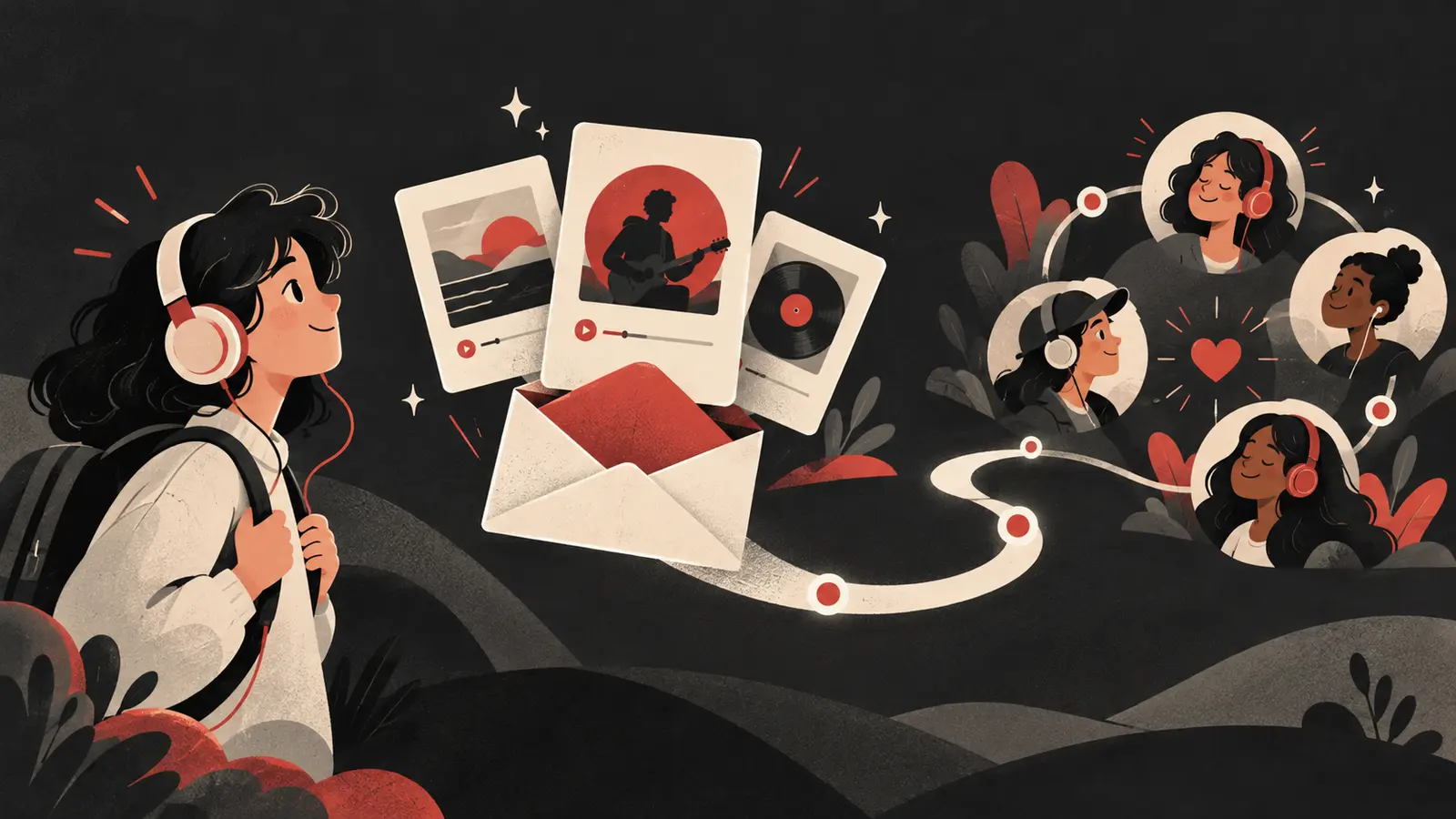
When someone gives you their email address, they are telling you they want more. A welcome sequence is the short series of emails that turns that moment into a relationship. The direct answer: make one clear promise when people sign up, collect clear consent, send three to five useful emails over the first two weeks, give each email one listening or fan action, and measure what fans actually do. This guide shows how to build it.
Why a welcome sequence matters
Social platforms decide who sees your posts. Streaming services decide what they recommend. Your email list is one of the few channels you control directly, which is why we argue that artists should own their fan contacts.
New subscribers are usually at their most interested right after they sign up. A welcome sequence uses that interest while it is fresh, instead of letting the list sit untouched until the next release.
Start with the promise and the consent
Make a clear promise on the sign-up page
Tell people exactly what they get: early access to new songs, show announcements, behind-the-scenes notes or a free download. A vague "join my newsletter" gives no reason to sign up. If you use a landing page to capture fans from ads, see building an artist fan capture landing page.
Collect consent properly
Use a clear checkbox or statement explaining what people are signing up for, and link to your privacy policy. Depending on where your fans live, privacy rules such as GDPR in Europe or CAN-SPAM in the US apply. Every email should include an easy way to unsubscribe. If you are unsure what applies to you, check with someone qualified.
The sequence: a simple five-email structure
You do not need a complicated automation. This structure works for most artists, and you can shorten it to three emails if you prefer.
Email 1: Welcome and deliver the promise (immediately)
Send it right away. Thank the fan, deliver whatever you promised and give one clear listening action, such as a link to your latest single. Keep it short.
Email 2: The story (day 2 or 3)
Explain who you are and what the music is about. One honest story about how a song was made is more memorable than a full biography. End with a link to listen.
Email 3: The best entry point (day 5 to 7)
Point new fans to the track, playlist or video you think best represents you. Ask them to save it or follow you on their streaming service.
Email 4: Ask a question (day 8 to 10)
Ask fans where they listen, which song they like most or which city you should play next. Replies help you learn about your audience and can help your emails land in the inbox.
Email 5: What is coming next (day 12 to 14)
Tell them about the next release, show or project, and what they will receive from you going forward. This sets expectations for your regular emails.
Writing tips
- Write like a person, not a brand. Short sentences, first person.
- One main action per email. Too many links split attention.
- Use plain subject lines that describe the email.
- Make it readable on a phone, because most fans will open it there.
- Use tracked links so you can see which actions work. Our UTM tracking guide explains how.
Measuring the sequence
Email tools report opens, clicks and unsubscribes. Opens have become less reliable because of privacy features in some email apps, so treat them as a rough guide. Clicks and replies are more useful.
To see whether emails lead to listening, compare send dates with saves, followers and streams in your streaming dashboards. These will not line up perfectly, because other activity affects them too, but they show the general direction. For a broader view, see music campaign metrics that matter.
A practical example
Imagine a singer-songwriter who runs a small ad campaign to a sign-up page offering an acoustic version of her single. Email 1 delivers the download and links to the original on Spotify. Email 2 tells the story behind the lyrics. Email 3 links to a short live video. Email 4 asks which city fans are in. Email 5 announces the next single date. She checks which emails get the most clicks and replies, and rewrites the weakest one. This is an illustration of how a sequence can be built, not a reported result.
Connecting email to your campaigns
A welcome sequence works best as part of a plan, not on its own. Paid ads can bring people to the sign-up page, the sequence warms them up, and the list becomes the first audience you tell about every release. Our music release campaign timeline shows where email fits, and retargeting music fans after an ad click covers people who visited but did not sign up.
FAQ
How many emails should a welcome sequence have?
Three to five is a good range. Enough to build a connection, not so many that new fans feel spammed.
Which email tool should I use?
Any reputable tool that supports automation, consent and easy unsubscribe will work. Choose one you will actually keep using.
Should I send emails if I have no new release?
Yes. Stories, live videos and questions keep the relationship alive between releases.
Will email guarantee more streams?
No. It gives you a direct way to reach interested fans, which often helps, but results depend on the music and the message.
Build the system around your fans
We help artists connect paid campaigns, landing pages and fan capture into one plan. See our services or apply to work with us.
Want this run on your release?
We take on a limited number of artists and labels, and we read every application ourselves.
Apply to Work With Us