
November 16, 2026 / 6 min read
Should Independent Artists Run Ads During Black Friday?
A go, no-go, or wait checklist for independent artists deciding whether to run music ads during Black Friday, based on objective and offer readiness.
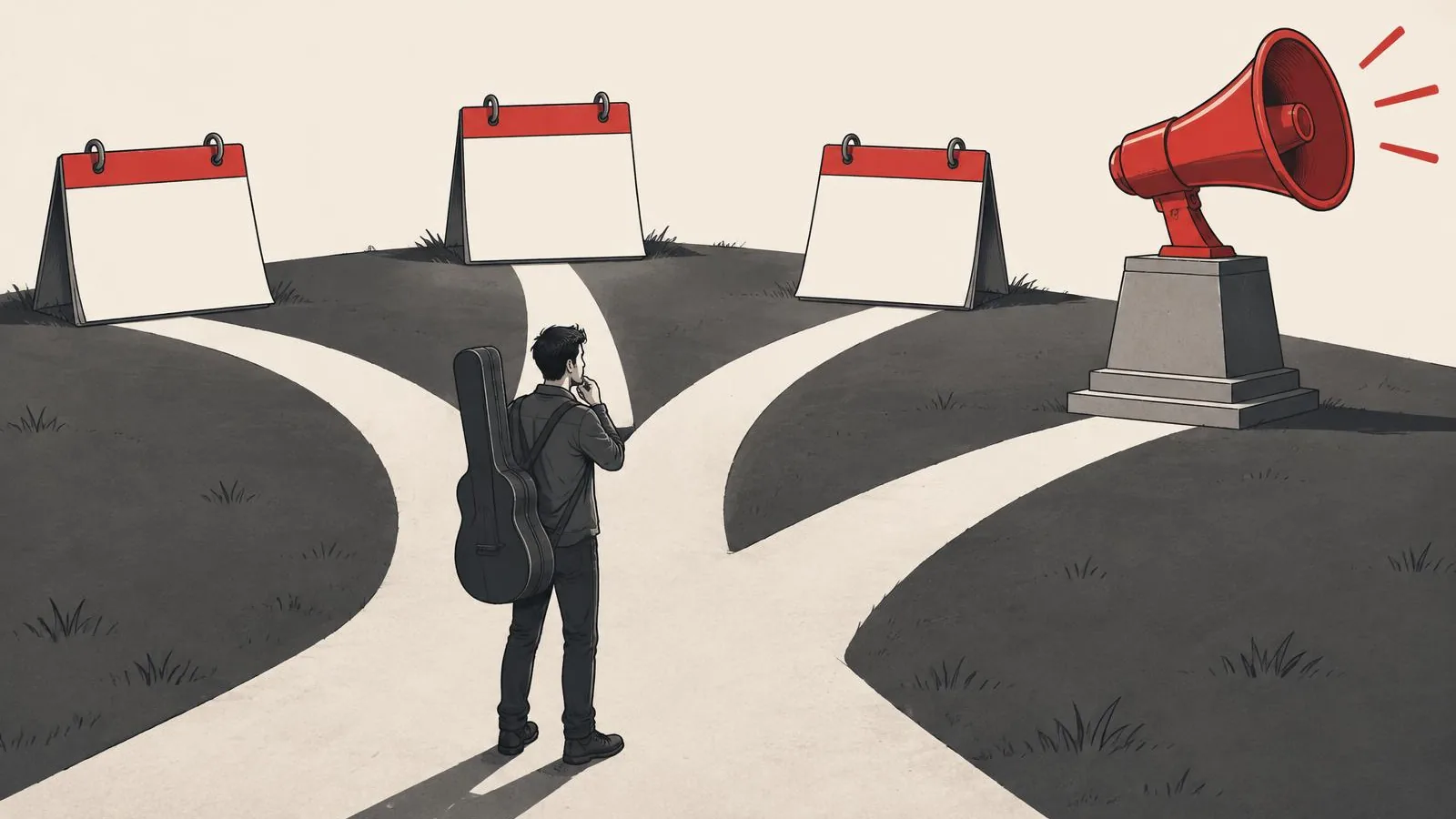
Run ads during Black Friday only when you have a clear objective, something worth acting on, and the time to watch delivery closely. If your release, landing page, or offer is not ready, waiting is usually the more disciplined choice. The question is not whether the week is "good" or "bad" for music ads. The question is whether your campaign has a reason to compete for attention during a period when many retailers are also buying ad space, and whether you can tell afterwards what the spend achieved.
This guide gives you a go, no-go, or wait decision you can make in one sitting. It does not cover how to build a campaign from scratch. For that, start with whether your song is ready for paid promotion.
Why this week needs its own decision
Ad platforms sell attention through auctions. Meta explains in its overview of ad auctions that the winning ad depends on bid, estimated action rates, and ad quality, not on price alone. Google describes a comparable logic in its Ad Rank documentation. When more advertisers want the same people at the same moment, competition for those placements can change. Whether that affects your specific campaign, audience, and country is something your own reporting has to show. There is no universal percentage you can plan around.
Black Friday and the surrounding days are also unusual for audiences. People may be shopping, travelling, or simply seeing more promotional content than usual. That can make a music message stand out or get lost. Neither outcome is guaranteed.
So the decision is less about the calendar and more about readiness.
The go, no-go, or wait checklist
Answer each question honestly. Write the answers down, because you will need them when you review results.
1. Is there a single objective?
Pick one: introduce a new song to people who have not heard you, bring recent listeners back, sell a specific merch item, or collect fan contacts. A campaign that tries to do all four at once is hard to judge in any week, and harder in a busy one.
2. Is there something to act on right now?
A song that is already live, a merch item that can ship in time, or a signup with a genuine reason to join. A teaser for a release that is weeks away gives people little to do today.
3. Is the destination ready on mobile?
Open your link on a phone over mobile data. Check that it loads, that the streaming or purchase button is obvious, and that tracking parameters survive the redirect. Our guide on UTM tracking for music campaigns covers the setup.
4. Is the offer still true after Friday?
If your message mentions a discount, a bundle, or a limited edition, confirm the end date and who controls it. Retiring an expired offer from live ads is a task someone has to own.
5. Can someone watch delivery every day?
Busy periods are a poor time to launch and leave a campaign unattended. If nobody can check spend, comments, and the destination daily, waiting is safer.
6. Do you have a comparison window?
You will want to compare this period with something similar: the same campaign in the prior week, or a matched period after the holiday. Without one, you cannot separate seasonal effects from creative or audience effects.
Reading your answers
Go when questions one through five are a clear yes and you have a comparison window. Keep the budget at a level you are comfortable losing as a learning cost, and set a review date.
No-go when the destination is broken, the offer is unclear, or nobody can monitor. Fixing those problems is a better use of the week than spending into them.
Wait when the creative and destination are ready but the main reason to act arrives later, such as a release in early December. Use the extra time to finish assets and test the destination. If the release is an album or EP, Spotify's Countdown Pages guide explains a pre-release page available to eligible releases; check the current eligibility rules before planning around it.
A hypothetical example
Imagine an independent artist with a single released three weeks ago and a small run of hoodies. Their week looks like this:
- The single's prospecting ads have been running steadily with stable reported costs.
- The hoodie page exists, but the shipping cut-off for December delivery has not been confirmed with the printer.
- The artist will be travelling for two of the five days, but their manager agrees to review spend, comments, and the destination on those days and has access to pause the ads.
Applying the checklist, the music campaign can continue at its current level because it has an objective, a live destination, a baseline to compare against, and named daily coverage for the travel days. Without the manager's cover, the monitoring question would fail, and the right call would be to pause or wait on both campaigns. The hoodie campaign is a wait: there is no confirmed delivery promise and no one available to answer buyer questions. Launching it would risk orders the artist cannot fulfil on time. Our guide to holiday merch order deadlines explains how to set that cut-off.
This is an illustration of the reasoning, not a recommendation for every artist with a similar situation.
If you do run ads, keep the setup stable
Platforms often need time to calibrate delivery after significant changes. Meta describes this in its learning phase overview, and TikTok has a similar learning phase explanation. Making large edits on the busiest day can reset that process and blur your comparison.
Practical guardrails:
- Launch or make major edits a few days before the period you care about, not on the day itself.
- Change one thing at a time and log it.
- Set a spend limit you will not exceed without a written reason.
- Decide in advance what would make you pause. Our guide on when to pause music ads during expensive periods walks through that decision log.
What to measure and what not to claim
Separate the signals your ad platform reports from what you can verify elsewhere:
| Signal | Where it comes from | What it can tell you |
|---|---|---|
| Impressions, reach, cost per result | Ad platform | Delivery and cost under current conditions |
| Link clicks and landing page views | Ad platform and your page | Interest in the destination |
| Streams, saves, followers | Streaming analytics | Listening behavior over time, not tied to one external ad |
| Orders and signups | Your store or email tool | Actions you can count directly |
A click from a social or search ad to Spotify does not prove that a stream happened. Streaming dashboards report listening on their own schedule and do not attribute it to a specific external ad. Campaigns bought inside Spotify's own ad tools have their own reporting, which is a different case. Treat any link between the two as an informed reading, not proof. Our article on Spotify ad clicks versus streams explains why.
Limitations of this framework
This checklist helps you avoid spending without a reason. It cannot predict how auctions will behave for your audience in a given year, and it does not replace looking at your own past data. Costs, delivery, and audience behavior differ by country, platform, objective, and creative. If you have no history, any decision is partly a test, and should be budgeted and documented like one.
FAQ
Is Black Friday always more expensive for music ads?
Not necessarily for every campaign. More advertisers can mean more competition, but your result depends on audience, objective, creative, and placement. Check your own reporting against a comparable window.
Should I stop all ads that week?
Only if your checklist says so. A stable campaign with a live song and a working destination may be fine to continue. Pausing everything by default can also interrupt delivery you were happy with.
Can I promote music and merch together?
You can, but separate campaigns make it far easier to read what each achieved, especially when the merch has a delivery deadline.
Plan the season with evidence
If you want help deciding which campaigns deserve budget this season, see how we structure paid music campaigns or apply to work with Shuffle.
Want this run on your release?
We take on a limited number of artists and labels, and we read every application ourselves.
Apply to Work With Us