
November 9, 2026 / 5 min read
How to Use Frequency Caps in Music Advertising
Understand music ad frequency controls, platform limitations and fatigue signals, then build a monitoring routine without relying on universal cap numbers.
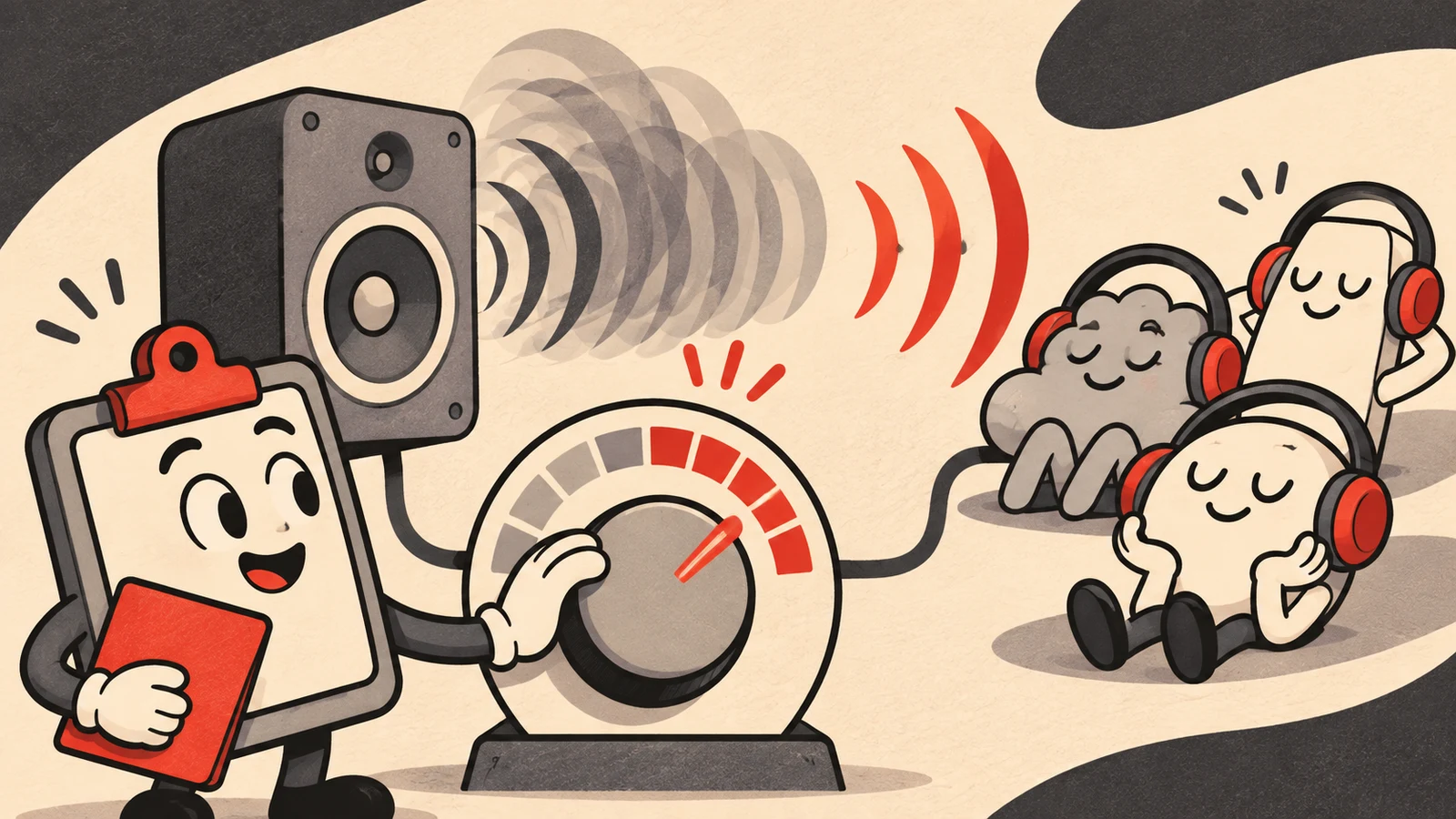
Use frequency caps in music advertising to limit repeated exposure where the campaign supports that control, then monitor whether repetition is helping people remember the song or exhausting a small audience. There is no universal ideal frequency for every artist or platform. A reported average is also not a promise that each person saw an ad that many times. Start by checking the available control, defining a reporting window, and reviewing frequency alongside reach, creative response, and observable downstream actions.
Understand what frequency does and does not measure
Frequency generally describes impressions relative to people reached within a defined reporting context. The exact calculation and estimation depend on the platform. An average can conceal uneven distribution: some people encounter the ad once while others see it repeatedly.
A cap is a delivery control, not a fatigue detector. Its scope matters: campaign, ad group, ad, person, and time window may differ. A cap within one campaign does not necessarily prevent someone from seeing your other campaigns or your ads on another platform.
Record the definition displayed in the account. Never add platform averages together and call the result a person's total exposure across the internet. You do not have a reliable cross-platform identity map merely because the same song is advertised in several places.
Check controls in the actual campaign setup
Meta: buying type and objective matter
Meta distinguishes auction and reservation buying. Its reservation frequency guidance describes controls associated with eligible reservation campaigns. Other available controls depend on the current objective and setup. Do not assume that every auction campaign has the same manual frequency cap.
Open the campaign's delivery settings and identify what is genuinely available before writing a plan around it. If a requested cap is absent, do not claim to have configured one through an unrelated setting.
Google Ads: campaign types have different rules
Google's frequency-capping documentation describes support for Display and Video campaigns, with different control scopes and options. It does not make manual capping a universal feature across Google Ads; Demand Gen is not covered by that same manual control.
Check the campaign subtype and current interface. For video, distinguish an impression-based limit from a view-based limit. They are different events and should not be treated as equivalent exposure measurements.
TikTok: separate reports from control availability
TikTok reports frequency metrics, including average seven-day frequency in relevant reporting contexts. Those metrics do not establish that every campaign has a manual cap. Check the selected buying type, objective, account eligibility, and current settings before promising a specific control.
When a control is unavailable, use a transparent monitoring and adjustment plan. Do not describe a budget change or audience change as a hard person-level cap.
Decide what repetition is supposed to achieve
Prospecting and retargeting need different interpretations. A person meeting the artist for the first time may need context. Someone who already visited a listening page may need a new reason to return, not the identical invitation indefinitely.
Write the purpose of each campaign in the monitoring sheet. For example, a hypothetical discovery campaign introduces the chorus, while a warm-audience campaign explains the song's story. These are planning roles, not claims that every viewer will progress through a measurable listener funnel.
Use retargeting after the first music ad click to choose a useful next message. Repetition becomes more defensible when the creative contributes something new.
Build a monitoring routine
Review these fields over consistent windows:
- Spend, impressions, reach, and reported frequency.
- Creative-level engagement and click behavior.
- Landing-page visits and relevant recorded actions.
- Audience size, geography, and recent targeting changes.
- Campaign controls, their scope, and any edits.
Inspect technical delivery after launch, then establish a repeatable review cadence appropriate to the campaign. Compare similar periods instead of contrasting one quiet day with an entire release week. Note whether reporting is delayed or estimated.
Our guide to music campaign metrics that matter helps distinguish platform engagement from verified listening. A streaming-button action does not prove a completed stream, so it should not become the sole justification for repeatedly showing the ad.
Diagnose fatigue before changing the cap
Rising frequency alongside weaker response can suggest fatigue, but it is not proof. A destination may have broken, an offer may have expired, competition may have changed, or delivery may have shifted toward a different audience segment.
Check the landing page and compare creative-level behavior first. Then ask whether the reachable audience has become too narrow or whether several campaigns are pursuing the same people. Only after this diagnosis should you adjust a supported cap, retire an asset, widen an eligible audience, or change the message.
See when to replace a music ad that stops working for a creative-led investigation. Avoid changing every variable at once: you need to understand which intervention helped.
Example: a small engaged audience
Imagine an artist retargeting recent website visitors with a single release announcement. Frequency rises while fresh reach slows and useful page actions weaken. The team first checks that the track link still opens and that reporting definitions have not changed.
They discover the audience is small and the announcement offers nothing new. A sensible response might be to pause the stale message, prepare a performance excerpt, and reconsider the audience window. If an appropriate cap is supported, they can adjust it while documenting the scope.
This example illustrates a decision process, not a numerical benchmark. A higher average alone would not justify the same action in a broader campaign with improving downstream behavior.
FAQ
What frequency cap should a musician use?
There is no reliable universal number. Choose a supported setting based on campaign purpose, audience size, creative variety, and evidence. Document it as a testable operating choice rather than an industry standard.
Does a cap stop all my ads reaching the same person?
Not necessarily. Controls can apply only within a particular campaign or delivery scope. Other campaigns and platforms may still reach that person.
Is high frequency always bad?
No. Repetition can build recognition, but an average cannot tell you whether the message remains useful. Evaluate the surrounding behavior and investigate deterioration rather than treating one metric as a verdict.
Make repeated exposure intentional
For a campaign plan that connects creative rotation, audience structure, and frequency monitoring, apply to work with Shuffle. Bring your current setup and the outcomes you can actually measure.
Want this run on your release?
We take on a limited number of artists and labels, and we read every application ourselves.
Apply to Work With Us