
October 21, 2026 / 5 min read
How to Retarget Music Fans After the First Ad Click
How to turn a first ad click into a listen, save or follow with retargeting audiences, sequencing, exclusions and honest measurement.
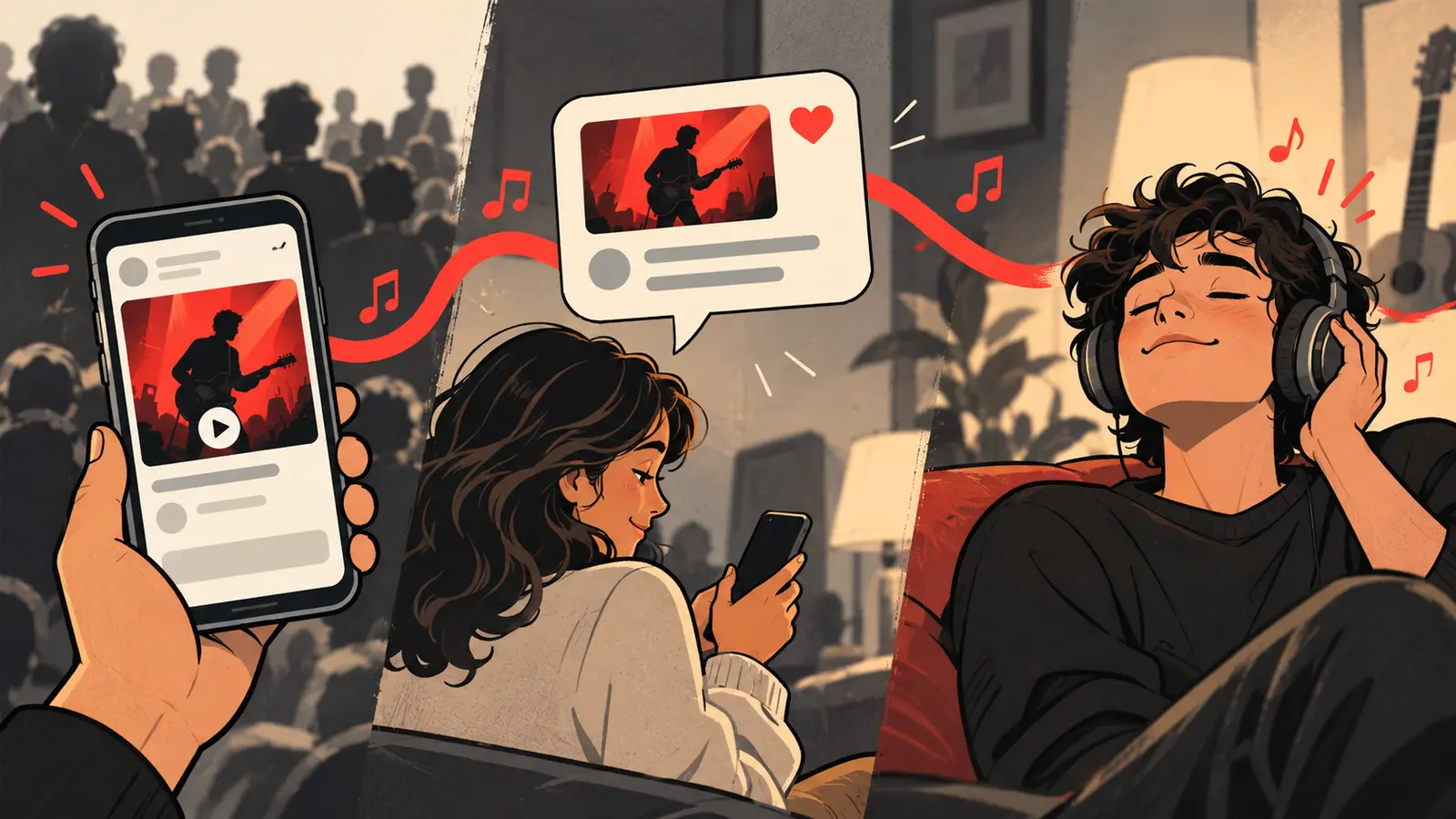
Retargeting music fans after the first ad click means showing a second, different message to people who already engaged, so a casual tap has a chance to become a listen, a save or a follow. Done well, it sequences the story, excludes people who already acted, caps how often anyone sees you, and measures qualified follow-up actions rather than assuming every click became a stream.
The first ad introduces the song. Retargeting is where you earn the relationship. This guide explains how to build those audiences, what to show them, who to leave out and how to tell whether it is working.
Why the first click is not the finish line
A person who clicks a music ad has shown curiosity, not commitment. They may have opened the streaming app, heard a few seconds and moved on. They may never have reached the app at all because a page loaded slowly. A click is a signal that someone was interested enough to act once.
That is exactly why it is valuable. People who already know your name are usually easier to reach with a second message than complete strangers. But it is also why reporting needs care. As we explain in Spotify ad clicks vs streams, an ad platform can record a click or a landing page event, while only the streaming platform can tell you what the listener did next.
The retargeting audiences that matter
Most ad platforms let you build audiences from people who interacted with your ads, your profiles or your website. For music, the useful ones are:
Video viewers
People who watched a meaningful portion of a clip. A viewer who stayed through most of a short video is warmer than one who scrolled past after a second. Build separate audiences for deeper and shallower viewing where the platform allows it.
Landing page visitors
People who reached your landing page, tracked by your pixel. This requires the pixel to fire correctly, so test it before launch. Our landing page checklist for paid traffic includes that step.
Outbound clickers
People who tapped a listening button on your page. They took the most deliberate step you can see from the ad side.
Profile engagers
People who liked, commented, saved or followed on social profiles. They know you exist and chose to interact.
Keep these audiences separate. Mixing a casual viewer with someone who tapped through to a streaming service hides the difference in intent.
Sequencing: what to show second
Retargeting works best when the second ad does something the first did not. Showing the same video again mostly adds frequency.
Practical sequences:
- New angle on the same song. If the first ad was a music video cut, follow with performance or behind-the-scenes footage. See performance footage vs music video clips for why they behave differently.
- Another section of the track. A different hook can catch someone the first section did not. Our guide on choosing the song hook for a music ad helps you pick it.
- Context about the artist. A short clip that says who you are can help an unfamiliar listener care. Our article on landing page copy for an unfamiliar artist applies the same thinking.
- A clear next action. For someone who already listened, the ask becomes saving the song, following the artist or joining your list.
Match the message to the depth of intent
A shallow viewer needs another reason to care. A landing page visitor who did not tap out may need a simpler path. An outbound clicker may be ready for the next song or an invitation to your fan list. Our guide to owning your fan contacts explains why that last step matters.
Exclusions: who to leave out
Exclusions keep retargeting efficient and respectful.
- Exclude people who already took the next step. If your retargeting asks for a landing page visit, exclude recent visitors.
- Exclude existing list members from list-signup ads, where you can match them with consent.
- Exclude audiences across stages so the same person is not in three campaigns at once with conflicting messages.
- Use time windows. A person who engaged months ago is not the same as one who engaged yesterday. Shorter windows tend to be warmer.
Frequency: how often is too often
Retargeting audiences are small, which means the same people can see your ads many times quickly. Watch frequency closely.
Signs you are overdoing it include rising cost per action, falling engagement and negative comments. When that happens, add a fresh creative, widen the window or lower the budget. Our guide on replacing music ad creative fatigue covers what to swap in. There is no universal ideal frequency. Watch the trend in your own data rather than chasing a fixed number.
Measuring qualified follow-up actions
The honest goal of retargeting is more qualified actions from people who already showed interest. Measure in layers:
- Ad platform view. Did the retargeting audience engage, visit the page or tap a listening button at a reasonable cost?
- Landing page view. Did visitors from retargeting take the page action more often than cold visitors?
- Streaming platform view. Over the same period, did saves, follows and repeat listening move in the markets you targeted? Our article on music campaign metrics that matter beyond clicks explains what each of these proves.
Treat streaming data as a second view, not as proof that a specific ad caused a specific stream. Other activity can influence the same numbers.
A simple retargeting setup
| Audience | Window | Message | Exclude |
|---|---|---|---|
| Deep video viewers | Recent | New angle on the song | Page visitors |
| Page visitors who did not tap out | Recent | Simpler path, one clear button | Outbound clickers |
| Outbound clickers | Recent | Save, follow or join the list | List members |
| Profile engagers | Longer | Artist context, next release | Active campaigns above |
Common mistakes
- Repeating the first ad. Same message, more frequency, less effect.
- One giant retargeting audience. Intent differences disappear.
- No exclusions. People who already acted keep seeing ads asking them to act.
- Counting clicks as streams. Retargeting clicks are still clicks.
Frequently asked questions
When should retargeting start?
Once your first campaign has built an audience large enough to deliver to. Very small audiences can deliver poorly.
Do I need a landing page to retarget?
Not for video or profile audiences. A landing page with a working pixel does give you more precise audiences.
Is retargeting worth it for a new artist?
It can be, because it focuses budget on people who already responded. Start small and read the results in both ad and streaming data.
Build a retargeting plan with Shuffle
If you want retargeting built into your next campaign, see our services or apply to work with us. We review every application ourselves.
Want this run on your release?
We take on a limited number of artists and labels, and we read every application ourselves.
Apply to Work With Us