
October 26, 2026 / 4 min read
Playlist Pitching vs Paid Music Ads: What Each Can Actually Do
Compare playlist pitching and paid music ads by control, intent, measurement, risk and long-term fan value, with a practical way to combine them.
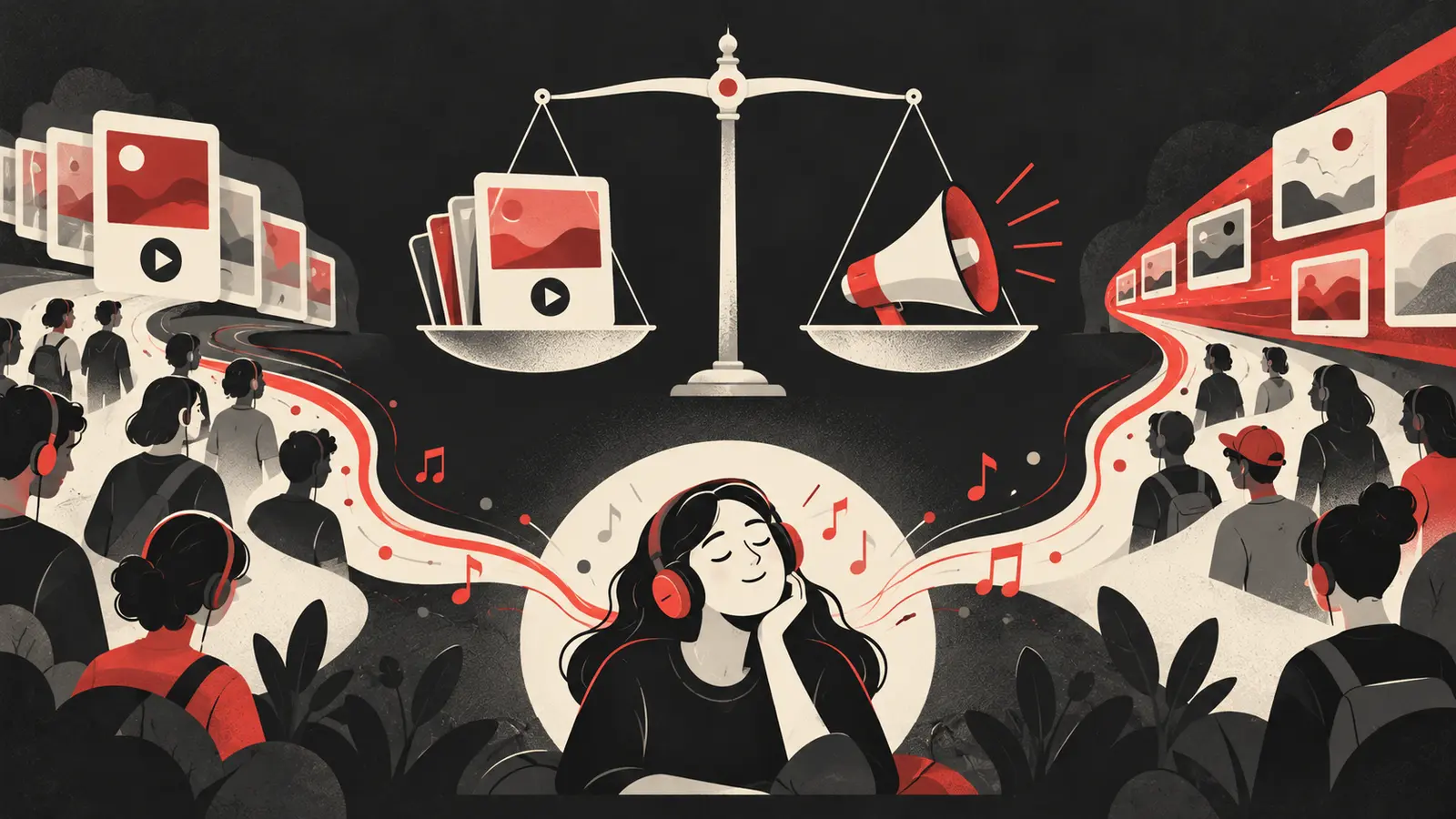
Playlist pitching and paid music ads are often treated as the same thing. They are not. The direct answer: playlist pitching asks a curator or editor to place your song in front of their existing audience, and the decision is theirs. Paid ads put your song in front of an audience you choose, and you control the spend and the message. Pitching can bring exposure you cannot buy directly. Ads bring control and measurement. Neither guarantees streams or fans, and many artists benefit from using them together.
What playlist pitching is
Pitching means submitting an unreleased song to people who run playlists. The main routes are:
- Spotify editorial pitching through Spotify for Artists, which lets you submit one unreleased track before release for Spotify's editors to consider. It is free. Placement is never guaranteed.
- Independent curators, who run their own playlists and may accept submissions directly.
Be careful with services that promise placements or a number of streams in exchange for payment. Spotify's rules prohibit paying for placement in a way that manipulates streams, and fake or bot streams can be removed. If an offer sounds guaranteed, treat that as a warning sign.
What paid music ads are
Paid ads are campaigns you run on platforms such as Meta, TikTok, YouTube or Google. You choose the audience, write the creative and decide the budget. People who respond go to a landing page or straight to a streaming service. We explain how these campaigns are structured on our services page.
Side by side
| Playlist pitching | Paid music ads | |
|---|---|---|
| Control | Low. The curator decides. | High. You choose audience, creative and spend. |
| Listener intent | Passive. People hear your song among others. | Active. People chose to click and listen. |
| Measurement | Stream sources in Spotify for Artists. | Ad data, landing page data and streaming dashboards. |
| Timing | Depends on acceptance and the playlist. | You can start and stop when you want. |
| Risk | Rejection, or low-quality paid offers. | Spending on the wrong audience or weak creative. |
| Fan relationship | Listeners may not know who you are. | You can capture contacts and retarget. |
Control and intent
The biggest difference is who is choosing. A playlist listener is often listening in the background and may never check the artist name. A person who clicks your ad has already shown some interest in your song. That does not make them a fan, but it gives you a better starting point, especially if you send them to a page where they can follow, save or sign up. See building an artist fan capture landing page.
Measurement
With pitching, you see results in Spotify for Artists stream sources, which show how much listening came from playlists. With ads, you see more steps: ad clicks, page actions and then streaming changes. Remember that the steps are different. An ad click is not a stream, which we cover in Spotify ad clicks vs streams, and if clicks are not turning into listeners, read why music ads get clicks but no listener growth.
Long-term fan value
A playlist placement can bring a lot of streams while it lasts. When the song leaves the playlist, those streams often drop, and many of those listeners never return. Paid campaigns can be planned around building something that lasts: saves, followers, email contacts and retargeting audiences. Our guide to retargeting music fans after an ad click explains how to keep in touch with people who showed interest.
This is not a rule. Some placements create real fans, and some ad campaigns create none. It is a question of what each method is designed to do.
How to combine them
You do not have to choose one. A practical approach:
- Before release: pitch the track to Spotify editors through Spotify for Artists, and prepare ad creative and a landing page.
- Release week: start ads to tested audiences so the song reaches interested listeners from day one.
- After release: watch stream sources. If editorial or curator playlists add the song, keep ads running to grow the audience around it. If they do not, the campaign still brings listeners you can measure and retarget.
- Ongoing: move budget toward the audiences and creative that produce saves and repeat listening.
Our music release campaign timeline shows how to schedule these steps.
A practical example
Imagine a hip-hop artist with a new single. He pitches it through Spotify for Artists three weeks before release, then runs ads on release day to fans of similar artists in two countries. The song does not get an editorial placement. The ads still bring visitors to a landing page, where some follow him and join his email list. Two weeks later, he retargets those visitors with a live clip. This is an illustration of combining the methods, not a reported result.
FAQ
Is playlist pitching free?
Spotify editorial pitching through Spotify for Artists is free. Some independent curators charge for consideration, which is a grey area. Never pay for guaranteed placements or streams.
Can ads help me get on editorial playlists?
No one can promise that. Editors make their own decisions.
Which is better for a new artist?
Pitching costs nothing to try, so do it. Ads give you control and data, which is valuable when nobody knows your name yet.
How do I know which method produced my streams?
Use stream sources in Spotify for Artists alongside your campaign dates and music campaign metrics that matter.
Want a plan that does not rely on luck?
We run paid campaigns built around real listeners and fans you can reach again. See our services or apply to work with us.
Want this run on your release?
We take on a limited number of artists and labels, and we read every application ourselves.
Apply to Work With Us