
October 26, 2026 / 5 min read
How to Use Spotify Radio to Build Organic Listening After Paid Promotion
Learn how to use paid promotion to create qualified listening signals that can lead to Spotify Radio and other organic discovery, without promising guaranteed streams.
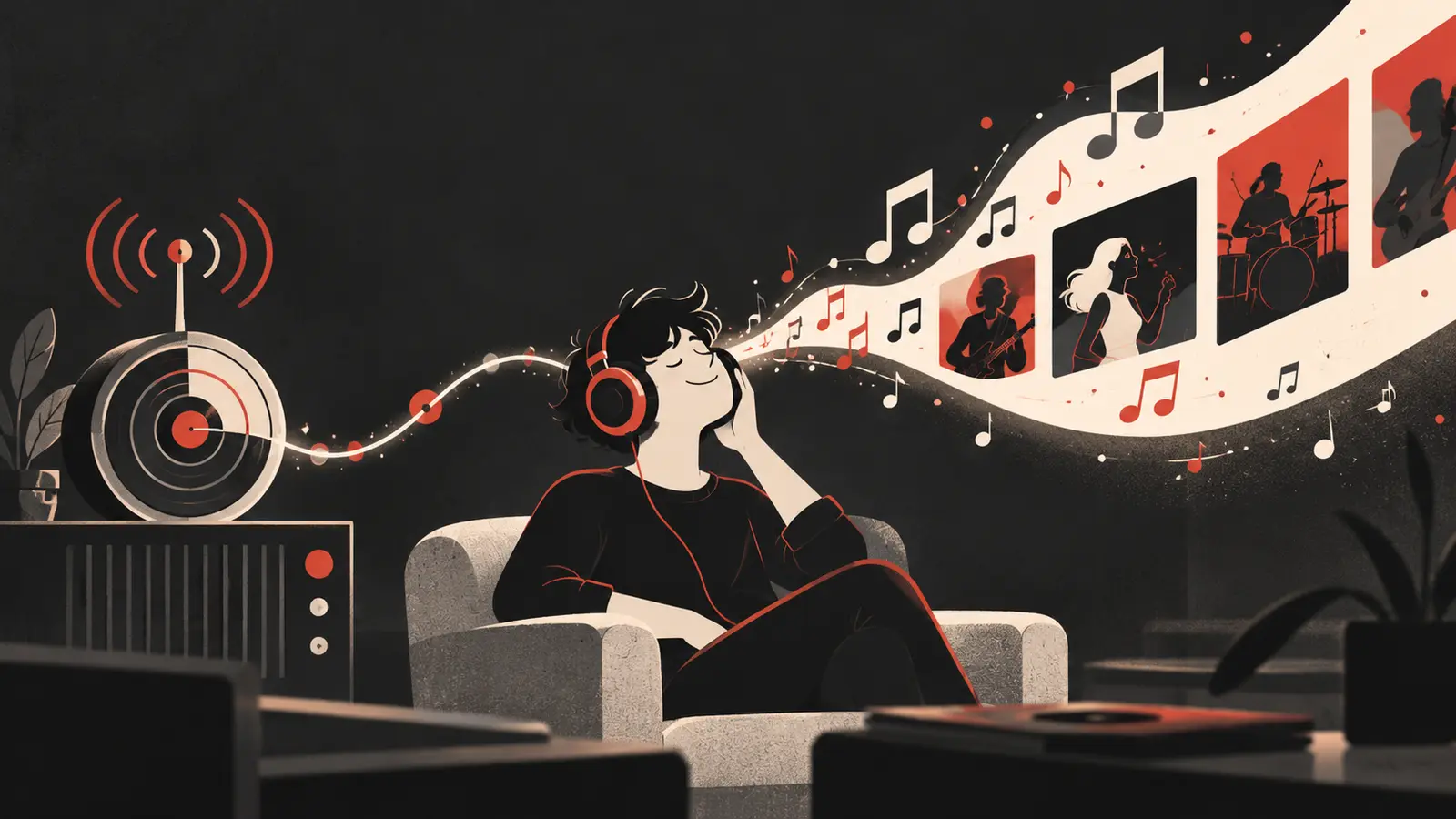
Spotify Radio is one of the ways listeners find music they never searched for. Paid promotion cannot switch it on, and nobody can promise that a song will be picked up by it. What a good campaign can do is put a song in front of people who are likely to enjoy it, so the listening that follows looks like real interest instead of noise. This guide explains how to plan paid promotion with that goal in mind, and how to judge whether organic discovery is starting to grow.
What Spotify Radio actually is
Spotify Radio, along with artist radio, song radio, autoplay and personalised mixes, is a recommendation surface. When a listener starts a radio station from a song or artist, or when autoplay continues after an album ends, Spotify chooses what comes next. Spotify does not publish exactly how it makes those choices, so anyone who claims to know the formula should be treated with caution.
What Spotify does say publicly is that its recommendations are shaped by listening behaviour and by how songs relate to each other. In practice that means your track is more likely to appear next to music that the same kind of listener already plays. That is the part a campaign can influence: who hears the song first.
Why paid listeners matter for organic discovery
If a campaign sends a broad, low-intent audience to Spotify, some of them will press play, skip after a few seconds and never come back. That pattern tells the platform very little that is useful about your song. If a campaign reaches people who already listen to similar artists, the ones who press play are more likely to finish the track, save it, add it to their own playlists or come back to it later.
None of those actions guarantees radio placement. They are simply the kind of behaviour that reflects genuine interest, and recommendation systems are built to notice genuine interest. That is why we treat targeting and creative as the first lever, not budget.
For a deeper look at why ad clicks and streaming behaviour are not the same thing, read Spotify ad clicks vs streams.
How to plan a campaign with organic discovery in mind
Start with the right song
Pick a track that works for someone who has never heard of you. A strong intro, a clear hook and a sound that sits comfortably next to a recognisable group of artists all help. A song that only makes sense to existing fans is harder to grow through recommendation.
Target by listening taste, not just demographics
Age and location are useful filters, but they do not describe taste. Build audiences around interests in comparable artists, genres and scenes, then let the ad platform learn from the people who actually engage. Keep a few separate audiences so you can see which one produces listeners who behave like fans.
Send people to a page that makes playing easy
The handoff from ad to Spotify is where many campaigns lose people. A short, fast page with one clear listening action usually works better than a cluttered link page. We compare the options in Spotify smart links vs direct links.
Give the campaign time
Recommendation surfaces respond to listening patterns over time, not to a single day of traffic. Plan for a steady campaign across several weeks rather than one short burst. Our music release campaign timeline shows how to spread activity around a release.
How to tell whether organic listening is growing
Spotify for Artists is the source of truth here, not the ad dashboard. Ad platforms report clicks and landing page actions. Only Spotify for Artists shows what happened on Spotify.
Look at these signals week by week:
- Source of streams. Spotify for Artists breaks streams down by where they came from, including listener's own library and playlists, artist profile and catalogue, and Spotify programming such as radio, autoplay and personalised mixes. A rising share from programmed and algorithmic sources is a good sign.
- Saves and playlist adds. These suggest people want to hear the song again.
- Listeners who return. Compare listeners and streams over time. More streams per listener usually means repeat listening.
- Activity after spend stops. The most honest test is what happens when the campaign pauses. Some decline is normal. A song with real momentum keeps a meaningful part of its listening.
If clicks are high but none of these move, read why music ads get clicks but no listener growth before adding more budget. For a full list of the numbers we watch, see music campaign metrics that matter.
A practical example
Imagine an independent indie pop artist releasing a single. The team runs short video ads to three audiences: fans of two comparable artists, a broader indie pop interest group and a lookalike audience built from people who visited the artist's page before. After two weeks, the ad dashboard shows the broad audience is the cheapest for clicks. Spotify for Artists tells a different story: the comparable-artist audience lines up with the weeks when saves rise and when streams from Spotify programming start to appear.
The sensible decision is to move budget toward the audience that produces listening behaviour, even though its clicks cost more. This is a hypothetical illustration of the decision process, not a result we are reporting.
Common mistakes
- Buying the cheapest possible clicks and expecting the algorithm to reward them.
- Using any service that sells fake or bot streams. That breaks Spotify's rules and can lead to removed streams or worse.
- Judging success on the ad dashboard alone.
- Stopping after a few days and concluding that nothing works.
- Ignoring the people who engaged. Retargeting them is often cheaper and more useful, as explained in retargeting music fans after an ad click.
FAQ
Can paid ads get my song on Spotify Radio?
No one can guarantee that. Ads can bring in qualified listeners, and their behaviour may contribute to wider discovery, but Spotify decides what it recommends.
How long does it take to see organic growth?
There is no fixed timeline. Watch your stream sources across several weeks and especially after the campaign pauses.
Is Spotify Marquee or Discovery Mode the same thing?
No. Those are Spotify's own promotional tools with their own rules and costs. This guide is about bringing listeners from outside Spotify through ads.
Which metric matters most?
There is no single number. Saves, repeat listening and growth in streams from Spotify programming, read together in Spotify for Artists, give the clearest picture.
Want a campaign built for real listening?
We plan campaigns around listeners who stay, not clicks that disappear. See our services or apply to work with us.
Want this run on your release?
We take on a limited number of artists and labels, and we read every application ourselves.
Apply to Work With Us